
Advanced Modular Thermal Tank Technology for Commercial Buildings
Commercial buildings are evolving rapidly. Energy costs are rising, performance standards are tightening, and mechanical rooms are shrinking. In this environment, traditional hot water systems—oversized steel tanks paired with on-demand combustion or resistance heating—are increasingly misaligned with modern efficiency goals. This is where advanced modular thermal tank technology is redefining commercial thermal energy storage. When integrated with a high-efficiency thermal water heater or a thermal heat pump, modular systems deliver superior insulation performance, improved cycle efficiency, and long-term operational flexibility.
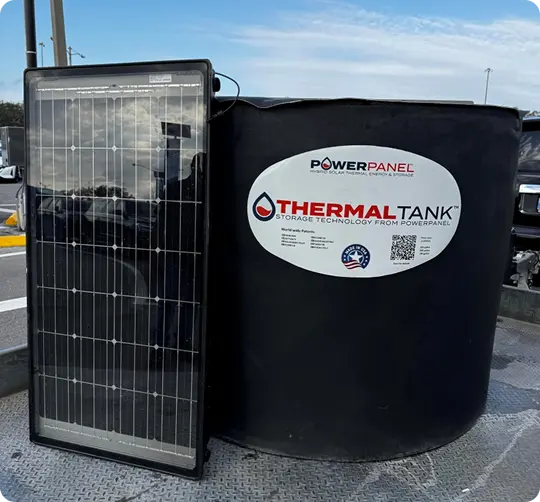
The Evolution of Thermal Storage in Commercial Buildings
Engineering Improvements in Modular Thermal Tank Design
The technical advantages of a modular thermal tank go far beyond convenience. Modern designs integrate high-performance insulation materials, corrosion-resistant components, and optimized heat exchange geometry to improve both energy retention and operational efficiency.
Core engineering advancements
- High-performance insulation systems: designed to minimize standby heat loss and reduce thermal bridging
- Non-corrosive structural materials: that extend lifecycle well beyond traditional steel tanks
- Unpressurized storage architecture: reducing stress fatigue and maintenance requirements
- Integrated heat exchanger compatibility: enabling efficient pairing with a thermal heat pump
From field experience, insulation consistency is one of the most underestimated contributors to system efficiency. Traditional steel tanks often rely on external insulation wraps that degrade over time. Modular systems use engineered insulation integrated into the tank structure, delivering more stable long-term thermal retention.
Insulation Comparison: Why It Matters
In commercial thermal storage, standby loss directly affects operating cost and equipment cycling. A poorly insulated tank forces upstream equipment—especially a thermal heat pump—to cycle more frequently, reducing efficiency and increasing wear. Advanced modular systems are built with integrated insulation layers that maintain uniform R-values across sidewalls, top, and bottom surfaces. By reducing heat loss, they allow stored thermal energy to remain available longer without reheating.
In practical applications, improved insulation results in:
- Fewer reheat cycles
- Lower electrical consumption
- Reduced peak load spikes
- Higher seasonal efficiency
Over the lifecycle of a commercial installation, these insulation improvements translate into measurable energy savings and longer equipment life.
What Is a Modular Thermal Tank?
This design improves insulation consistency, reduces installation complexity, and enables scalability. When integrated with a thermal water heater or thermal heat pump, the modular tank absorbs demand fluctuations and allows heating equipment to operate in stable, efficient cycles. The result is enhanced cycle efficiency, lower standby losses, and improved long-term performance. Modular architecture transforms thermal storage from a fixed constraint into an adaptable component of modern commercial energy systems.
Cycle Efficiency and Heat Pump Integration
Commercial Installation and Structural Advantages
Installation logistics often determine whether a thermal energy storage project proceeds. Traditional tanks require heavy lifting equipment, structural reinforcement, and extended scheduling coordination. Modular systems eliminate these barriers by allowing lightweight components to be carried into place and assembled on-site.
Installation and structural advantages
- Components are lightweight and manageable without cranes
- Tanks fit through standard doors, elevators, and tight mechanical rooms
- Reduced dry weight simplifies structural approval
- Assembly timelines are predictable and significantly shorter
These advantages reduce project risk and downtime in occupied commercial facilities. Faster installation minimizes operational disruption, making modular thermal tanks especially attractive for retrofits in hotels, healthcare facilities, and multifamily buildings.
Talk to our experts about your energy situation today.
Scalability and Long-Term Commercial Value
Commercial buildings evolve over time. Occupancy increases, usage patterns shift, and energy systems are upgraded. Traditional tanks lock buildings into fixed storage volumes that may become inadequate or inefficient.
Scalability and lifecycle advantages
- Additional modules can be added without removing existing tanks
- Storage volume can match real load measurements
- Systems integrate easily with upgraded thermal heat pumps
- Long service life reduces replacement frequency
This scalability reduces capital risk and allows storage capacity to grow incrementally. From an operational perspective, modular systems protect investments by adapting to future demand without major infrastructure changes. Over decades, this flexibility delivers strong return on investment and long-term energy resilience.